From the term's CVP report
In the classroom: science, mathematics and social science
A pink hand against corruption, a pendulum in five groups, dustbins from waste and a Google Doodle for the forests: learning by doing.
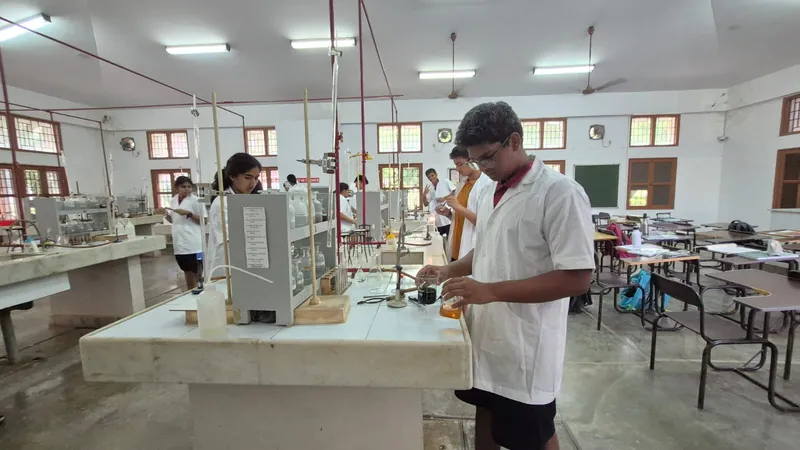
Across the sciences, mathematics and social science, lessons this term asked students to test ideas with their hands and to connect them to the world outside the classroom.
Science
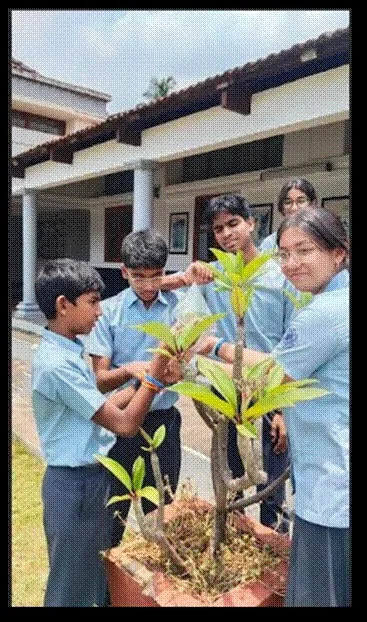
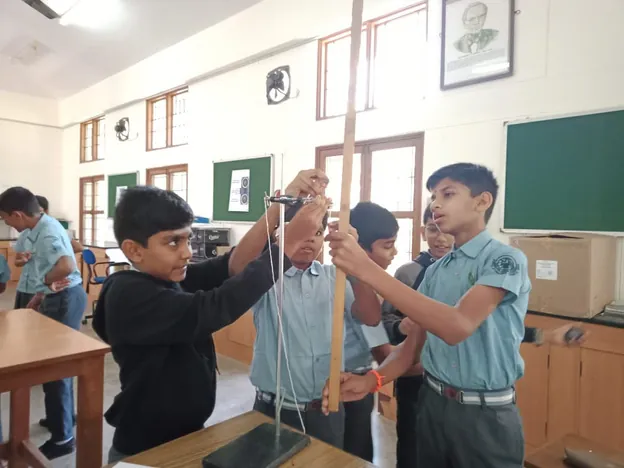
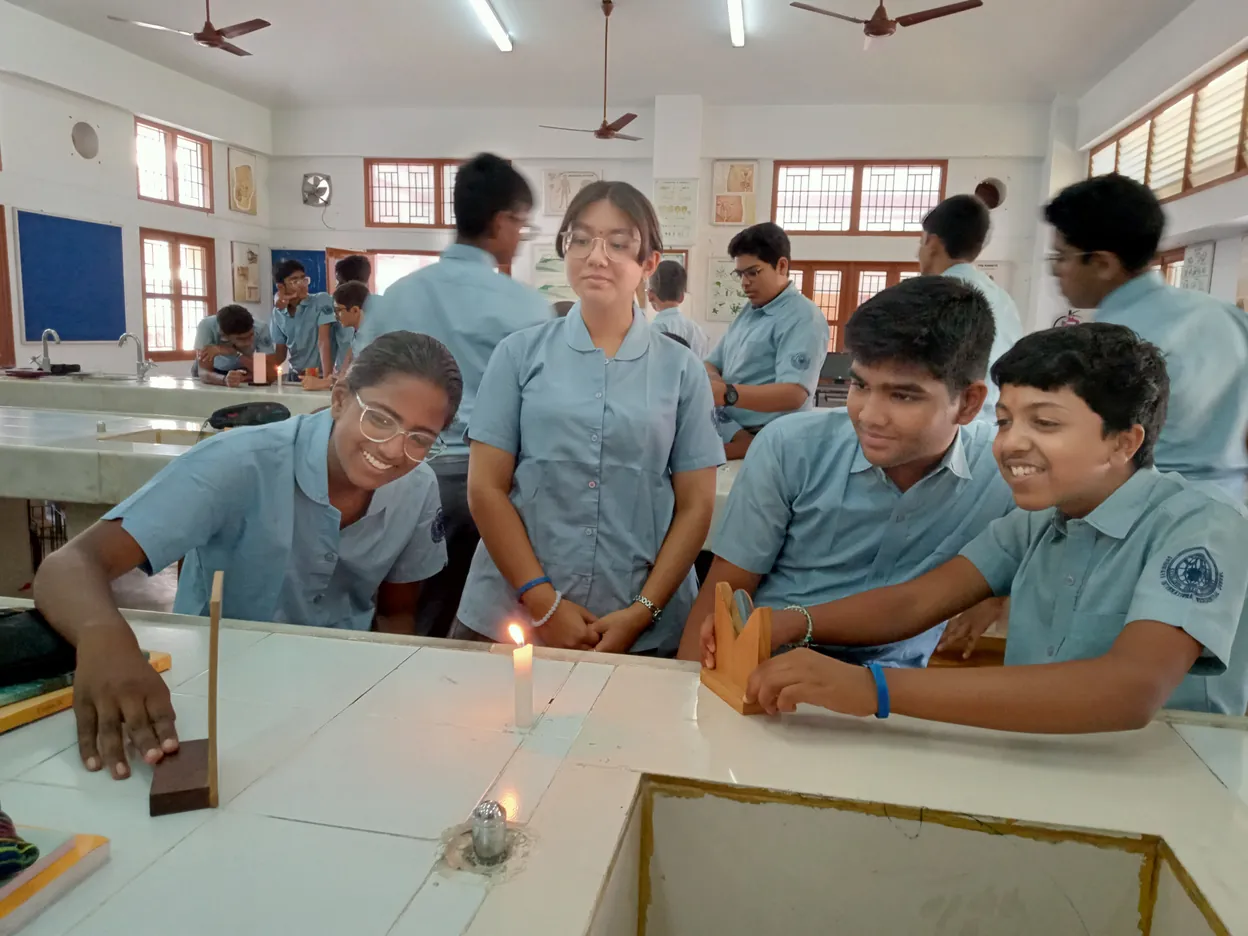
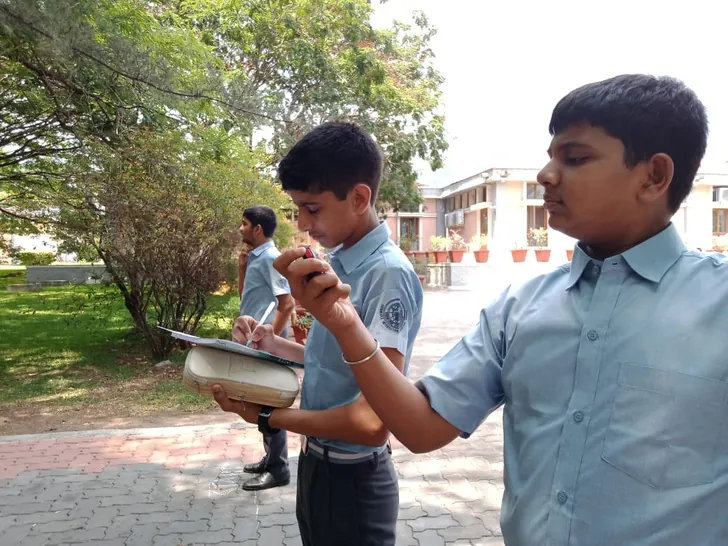
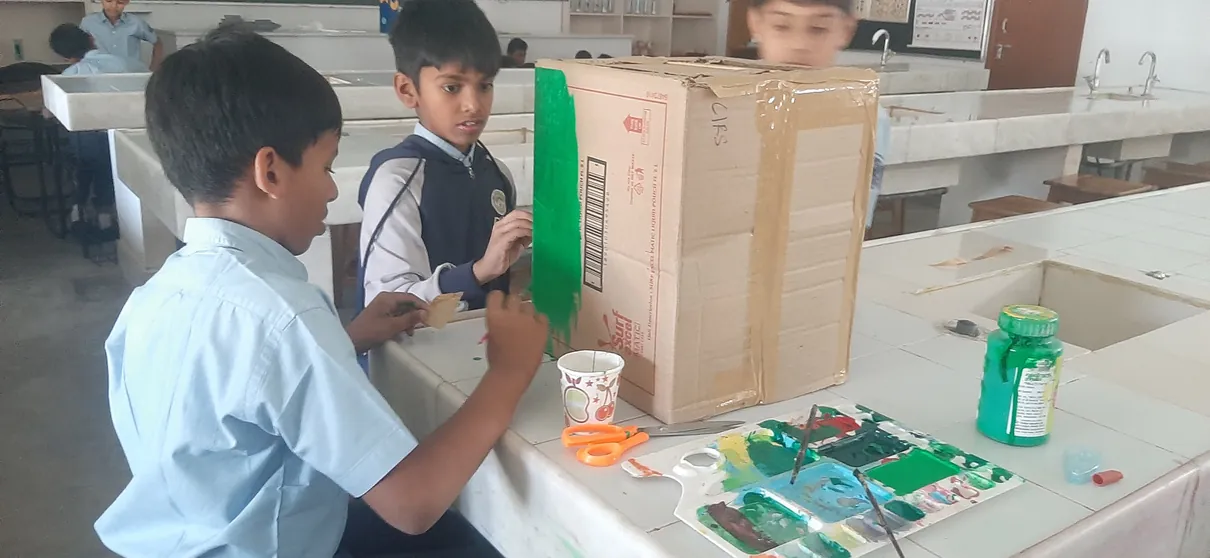
Grade 10 used phenolphthalein for a Pink Hand demonstration against corruption (3 March 2026), studied transpiration in plants (20 November 2025) and investigated mirrors (23 March 2026). Grade 12 chemistry checked the purity of substances and linked the chemistry to the breathalyser (3 March). Grade 9 measured work, energy and power on the school ground (12 November 2025) and visited the sound recording room in a lesson on sound. Grade 7 found the period of a simple pendulum in five groups of five (13 January 2026). Grade 6 created constellations, among them Orion, Gemini, Libra and Canis Major (12 March). Grade 4 tested water pressure, reacted vinegar with baking soda and put out a candle with carbon dioxide (7 January). In EVS, Grade 5 made dustbins from waste for use in classrooms and dormitories (24 January).
Mathematics
Grade 8 drew exponent doodles (13 February 2026) and joined the dots on exponents (24 March), and Grade 10 explored the ratios behind pairs of linear equations (13 February).
Social science
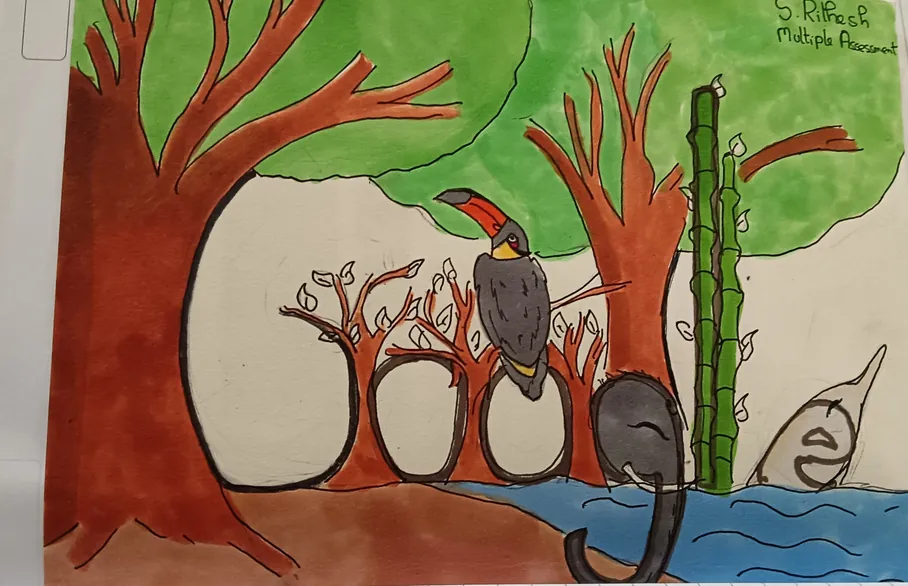
Grade 9 drafted election manifestos (13 September 2025) and debated democracy (20 November). Grade 8 designed Google Doodles on forests and wildlife (18 November) and studied the Preamble (11 January 2026).