The Crossroads Issue 33
Bharat’s Energy: Beyond the Straits
Not limited to mere supply chains or owning a strait, the 21st century demands that every country either be a part of the Western cult to secure energy (if you cannot produce it), which is failing miserably, or do something on its own. While conflicts monopolize the headlines, the war is geoeconomic – like a current – calm on the surface, but rough and turbulent underneath. Sanctions appear more frequently than LaLiga games, while freight insurance caps and supply chain weaponization of critical rare earth minerals are a bigger display of power today than fighter jets.
A quarter of the planet’s primary energy flows through the Strait of Hormuz, the Bab el-Mandeb, and the Strait of Malacca; these narrow and crowded maritime arteries are tumors to global energy security. And disruptions, whether by state-sponsored militants or governments 11,000 km away, send shock waves through the global energy markets. In this era, sadly, the true geopolitical and geoeconomic power lies in the ability to decouple national survival from these volatile, external maritime corridors.
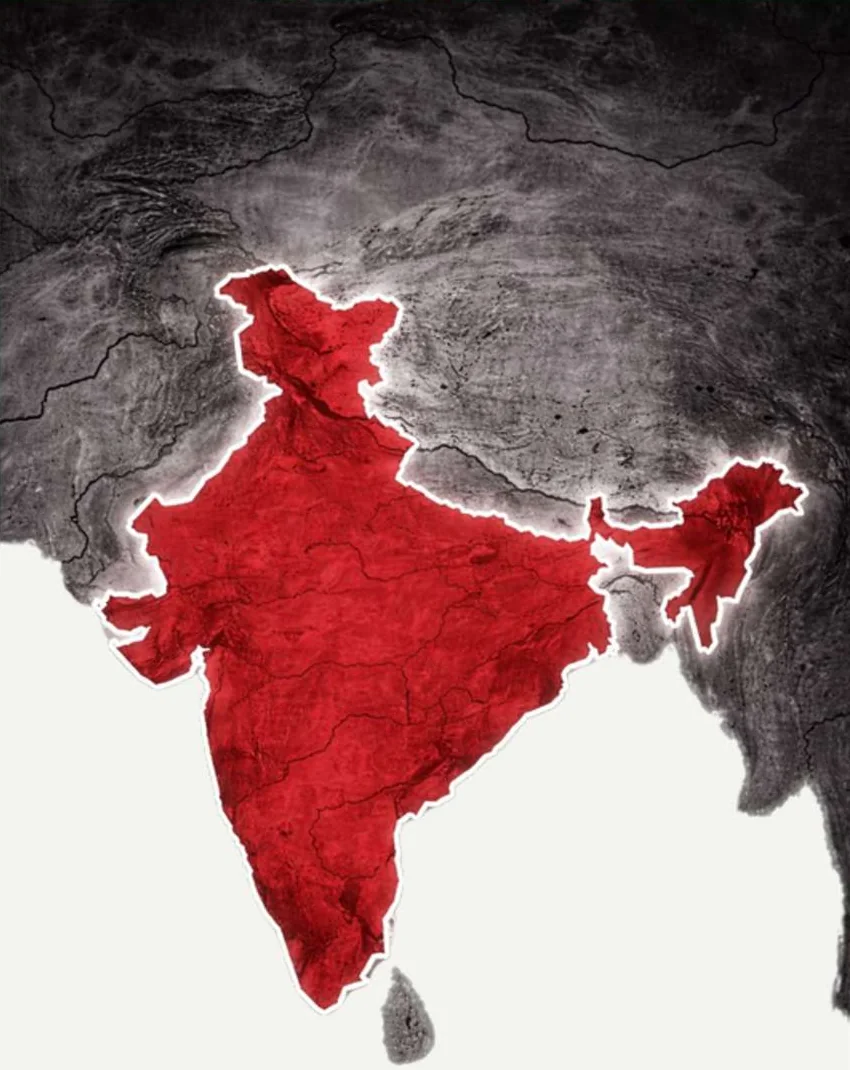
With 74% of chief economists of the World Economic Forum claiming that India has the strongest growth outlook, the detail is that 85% of Bharat’s crude is imported from rentier nations. The country’s appetite is increasing exponentially, yet the nation holds reserves for only about 78 days. This can lead to disasters worse than those seen in 1991. These issues can lead to severe political instability and a halt in economic growth. With the Forex reserves falling and rising, along with the cost of goods in the market, the nation will certainly not be in a great position.
To navigate through this byzantine situation, Bharat astutely aligned itself multilaterally. Rather than depending solely on the Middle East, as has been the trend, Bharat also effectively saves Forex by buying discounted Russian crude and constantly hunting for new trade corridors to keep consumer prices from instantly spiralling. Though well planned, walking the knife’s edge is only a temporary fix in this battle of snakes.
Ultimately, to protect its interests, India faces a stark choice: import enough oil even in times of no crisis, as China does (which has more oil than the 32 members of the International Energy Agency combined!), or diversify its energy sources by expanding into ethanol, methanol, nuclear energy, and green hydrogen. Ethanol and Methanol have emerged as the twin pillars of our government’s interest in the transition toward alternative energy; simultaneously, green hydrogen is the next aim of the entire world.
The cornerstone of Bharat’s transition into aatmanirbharta in energy is ethanol. It is indisputably the king of controversy in the automobile industry and a part of the supposed solution to make Bharat energy-secure. Ethanol is not just an environmental initiative; it is geoeconomic resilience. Billions of dollars that flow outward are retained by slashing crude imports and can alternatively be used for the import and usage of other merit goods. Since 2014, ethanol blending has saved the nation ₹1.9-₹1.98 lakh crore. Finishing the project of E20 has various positive effects on paper, but the hasty implementation meant that the automobiles were not ready for the new fuel, and NITI Aayog’s warning about the same was visible through massive public outrage. The ethanol industry pumps massive liquidity into the rural agrarian economy.
Converting excess or unfit agricultural outputs to this carbon-efficient fuel led to the reduction of the supply of important foodstuffs like maize to the market, as farmers opted to sell to the ethanol companies for better pay. Bharat, a usual exporter, had to net import 0.9 metric tonnes of maize to suffice the demand. Contrastingly, ethanol also protects the nation from disputes and conflicts at maritime chokepoints by reducing the demand.
While ethanol can be seen as the practical present, the future belongs to Green Hydrogen. The plan of decarbonizing steel refining and fertilizer production requires 5 MMT Green Hydrogen output annually by 2030. While converting solar and water into a fuel within the borders of the country represents the pinnacle of strategic independence, the cost of doing so is three times higher than the one involved in using gray hydrogen from fossil fuels. Producing electrolyzers is a move from being dependent on Middle Eastern oil to being dependent on minerals - particularly Chinese sourced.
Though ethanol and green hydrogen can be used for specific niche areas, like light passenger vehicles, Bharat is looking at methanol as a more dynamic substitute. Using NITI Aayog’s Methanol Economy, the fuel is used as a strong complement to ethanol.
The supremacy of this fuel lies in its sourcing: unsustainable and unproductive goods like high-ash coal, municipal waste, and agricultural biomass. Methanol’s applications can revolutionise heavy transport, inland marine transport, and coastal shipping by M15 blending. It also serves as a cleaner alternative to industrial generators. Having the capability to blend with LPG and burn without residue, it can be used for household cooking as well. By building this flex-fuel infrastructure with multiple alternative fuels, Bharat is passively diversifying to reduce crude requirements and eventually reach energy security.
At length, Bharat’s energy future is not about getting the right policy, which is impossible in a democracy. But Bharat can surely make calculated trade-offs and implement structural changes at a realistic pace to make a sustainable and self-improving transition smooth. As the reality of this transition proves, ethanol walks a razor’s edge with food security, while green hydrogen remains a costly geoeconomic gamble. Instead of wasting resources, Bharat has deployed a domestic matrix that contains ethanol for now, methanol for heavy transport, and hydrogen for tomorrow, forging an impenetrable internal shield.